Vacuum Training for Pets: Short Sessions Beat Flooding
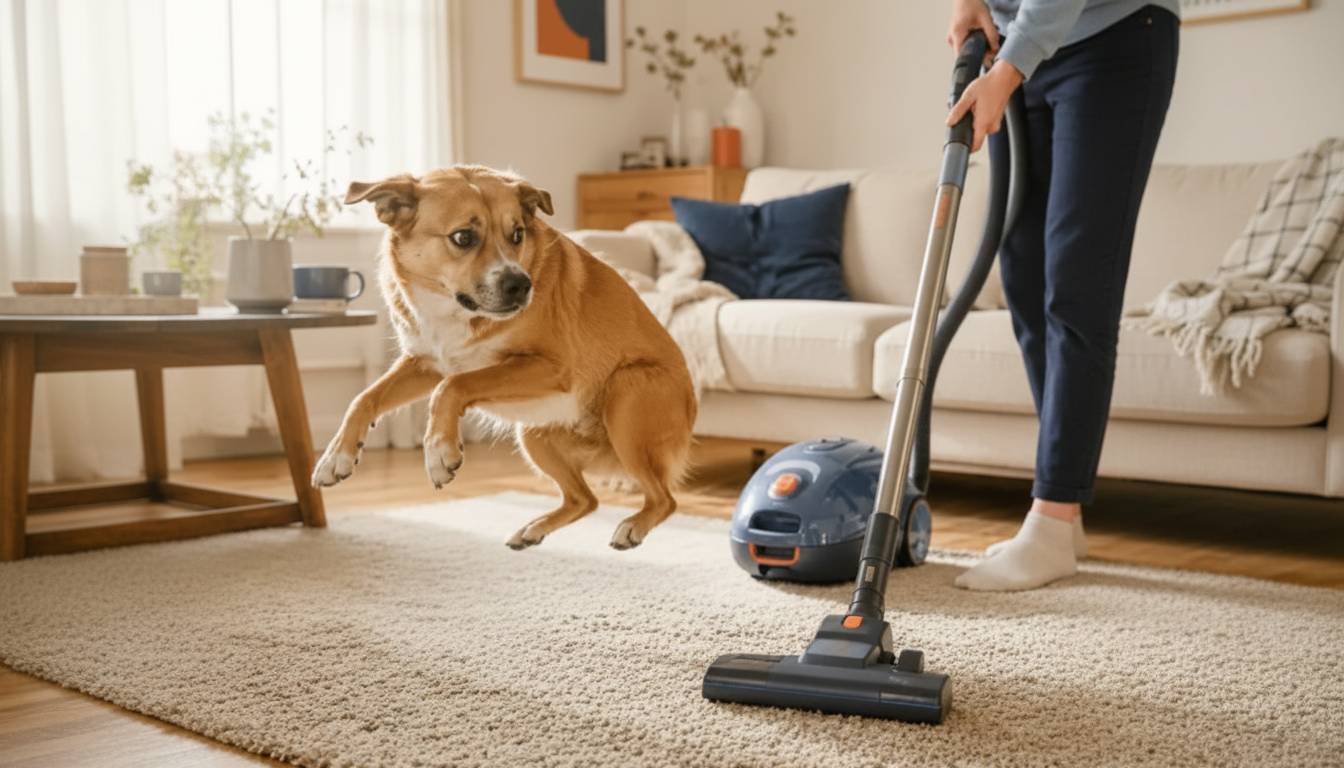
Should I turn the vacuum on in short sessions or keep it running until my pet calms down?
Answer
Use short, controlled sessions rather than keeping the vacuum running until your pet “gives up.” Leaving it on continuously can overwhelm many pets and may intensify fear through a flooding effect—your pet may look quiet, but that can be shutdown rather than true calm. Short sessions let you build tolerance while keeping stress lower and progress more reliable.
Start with the vacuum off and focus on creating a predictable routine. Let your pet investigate it at a comfortable distance and reward calm behavior with treats or a favorite toy. Next, add the smallest possible “sound step,” such as clicking the power button on and off quickly, or running it briefly in another room with the door partially closed. Keep the exposure short (seconds at first), then stop while your pet is still coping.
Gradually increase difficulty only when your pet stays relaxed: longer run time, closer distance, then moving the vacuum slowly. If your pet shows signs of stress (panting, trembling, tucked tail, dilated pupils, hiding, growling, swatting, frantic escape attempts), reduce the intensity—more distance, shorter duration, or a quieter setting. The goal is repeated wins, not endurance.
To speed success, pair vacuum time with something your pet loves. Feed high-value treats only during the vacuum noise, then stop treats when the noise stops. You can also provide a safe “opt-out” zone (a gated room, covered crate, or high perch for cats) so your pet can choose distance without being chased by the vacuum. If your pet has severe panic, consult a veterinarian or qualified behavior professional; targeted training plans and, in some cases, short-term medication support can make a big difference.
For a step-by-step approach and practical tips, see the full guide here: https://desirablegoodsnest.shop/should-i-turn-the-vacuum-on-in-short-sessions-or-keep-it-running-until-my-pet-calms-down/.
FAQ
How can I tell if my pet is truly calm versus just frozen in place?
True calm looks loose and curious: normal breathing, soft body posture, and the ability to take treats or disengage. Freezing, wide eyes, stiff posture, tucked tail, pinned ears, or refusing food often signals fear, even if your pet is quiet.









Leave a comment