Calm Your Mind: Guided Anxiety-Relief Meditation Audio
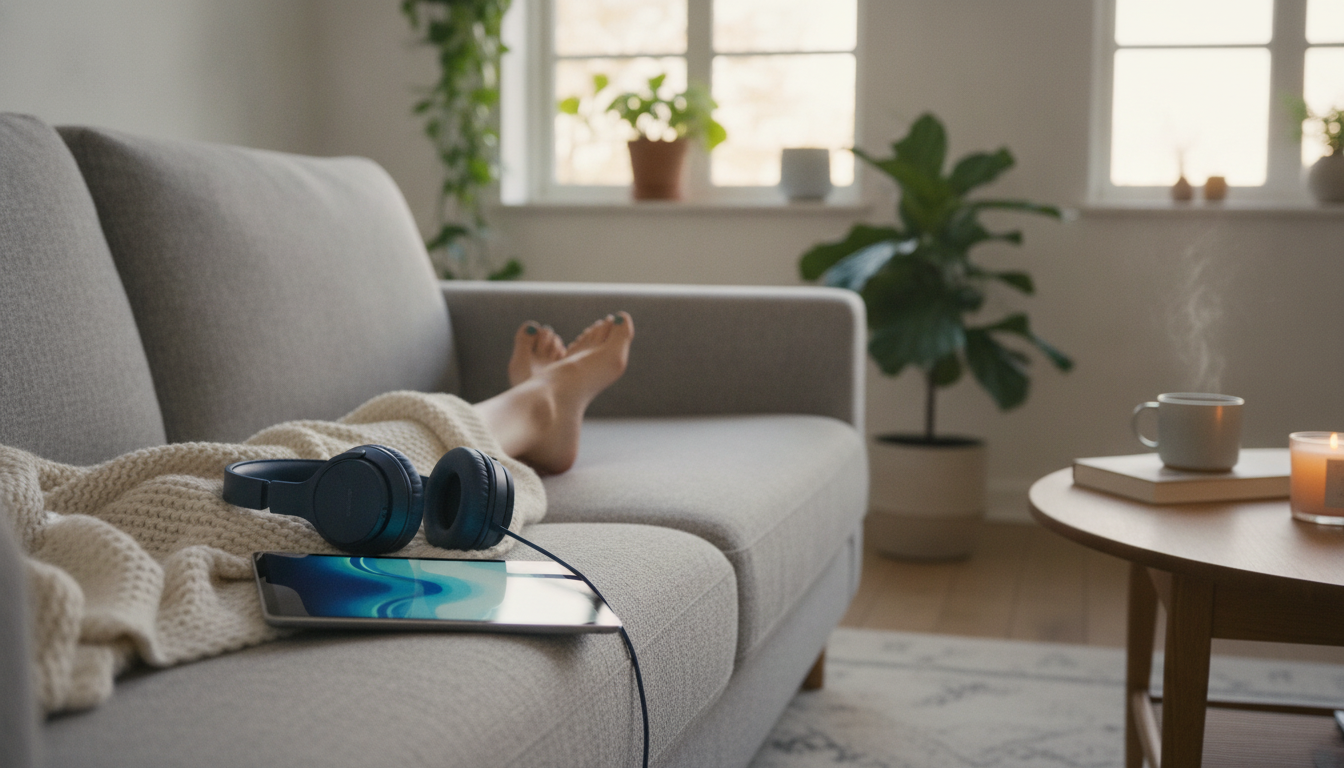
Racing thoughts, a tight chest, and that feeling of being “on” all the time can make even simple tasks feel heavy. A guided meditation series provides structure when the mind won’t settle—using steady voice cues, breathing, and body awareness to help shift from overthinking into calmer, more grounded attention. This page breaks down how an anxiety-relief meditation audio course fits into real life, what to expect from a guided series, and how to start building a consistent, low-pressure practice.
What guided meditation can do when anxiety shows up
When anxiety spikes, silence can feel loud. Guided meditation replaces “What do I do now?” with clear, gentle steps—so attention has something stable to return to.
- Creates a clear focus point (voice guidance, breath cues, body scan) so attention has something steady to return to
- Supports downshifting from stress reactivity by encouraging slower breathing and relaxed muscle tone
- Helps interrupt repetitive thought loops through gentle labeling and redirection (“notice,” “release,” “return”)
- Builds a repeatable routine: consistent practice often matters more than long sessions
- Adds a sense of safety and containment—useful when silence feels too intense or distracting
Research and clinical guidance commonly describe mindfulness practices as supportive for stress regulation when used consistently and safely. For a balanced overview of effectiveness and safety considerations, see NCCIH: Meditation and Mindfulness—Effectiveness and Safety and American Psychological Association: Mindfulness meditation.
How to make the most of an audio-based meditation series
Audio courses work best when they’re easy to repeat. The goal isn’t a perfect session—it’s building a reliable on-ramp into steadier attention.
- Choose a reliable time trigger: right after waking, after lunch, or before sleep
- Set the environment for success: sit supported, dim lights, and keep temperature comfortable
- Use headphones if attention is scattered; use speakers if headphones feel claustrophobic
- Pick a single track and repeat it for several days to reduce decision fatigue
- Treat distractions as part of the practice: notice wandering, then return to the next cue without self-judgment
- Keep the goal simple: “practice returning” rather than “empty the mind”
Quick-start routine options
| When to use it | Track length | Goal | Tip to keep it easy |
|---|---|---|---|
| Morning reset | 5–10 minutes | Start the day with steadier attention | Do it before checking messages or news |
| Midday tension release | 7–15 minutes | Loosen jaw/shoulders and reduce mental noise | Pair with a short walk or stretch afterward |
| Evening wind-down | 10–20 minutes | Slow the nervous system for sleep readiness | Lower screen brightness 30 minutes before |
Calm Your Mind: Guided Meditation Series (Audio Course) — what it offers
If you’re looking for a straightforward way to practice without overthinking the “right” technique, Calm Your Mind: Guided Meditation Series | Audio Course | Anxiety Relief Meditation is built around repeatable guidance you can return to whenever stress ramps up.
- A guided series format designed for anxiety relief and stress regulation through consistent practice
- Audio delivery that can be used at home, during breaks, or while traveling (where safe and appropriate)
- Useful for beginners who want step-by-step direction and experienced meditators who want a steady routine
- Supports common needs: calming racing thoughts, releasing body tension, and returning to the present moment
- Best results typically come from repetition—revisiting the same sessions to strengthen familiarity and ease
To make the habit more sustainable, pairing meditation with a simple planning routine can help reduce mental clutter. If you like written structure, Goal-Setting Guide for Real Results – Printable Goal Planner, SMART Goals Workbook & Productivity Template for Achievable Success can support a calmer day by externalizing tasks and priorities instead of carrying them all in your head.
A simple “calm-down” sequence to use with any guided session
This sequence takes pressure off your mind by giving your body a clear pathway into “safe enough right now.” Use it at the start of any track, or anytime anxiety rises.
- Posture: sit or lie down with support; unclench the jaw and soften the belly
- Breath: exhale fully, then let the next inhale arrive naturally; repeat 3–5 times
- Body scan: notice three areas of tension (forehead, shoulders, hands) and invite them to soften
- Anchor: pick one—breath at the nostrils, the rise/fall of the chest, or contact points with the chair
- Return phrase: use a neutral cue such as “here” or “back to the breath” when the mind wanders
- Close gently: open the eyes slowly, look around the room, and name 3 things seen to re-orient
If breathwork is especially helpful for you, the NHS breathing exercises for stress page includes simple patterns you can combine with guided audio (at a pace that feels comfortable).
Who this course tends to help most (and who should be cautious)
Guided meditation is often most useful when you want steadiness and reassurance—not another task to “get right.” It can also be a supportive add-on alongside therapy or other care.
- Often helpful for: frequent worry, stress-related restlessness, difficulty winding down at night, or overwhelm from constant input
- A good fit for: people who prefer guided voice direction rather than silent meditation
- Consider extra support if: meditation brings up panic, dissociation, or distressing memories—shorter tracks and professional guidance may be better
- Safety note: avoid using meditation audio while driving or doing tasks that require full attention
- If anxiety feels severe or persistent, meditation can be a helpful complement but not a replacement for clinical care
Common obstacles and practical fixes
FAQ
How do I make my mind calm?
Calm usually comes from repeatedly returning attention to an anchor (breath, body sensations, or sound), lengthening the exhale, and relaxing obvious tension points like the jaw and shoulders. Try a 60-second reset: exhale slowly, drop your shoulders, feel your feet or the chair, and gently label distractions “thinking” before returning to your next breath; wandering is normal.











Leave a comment